
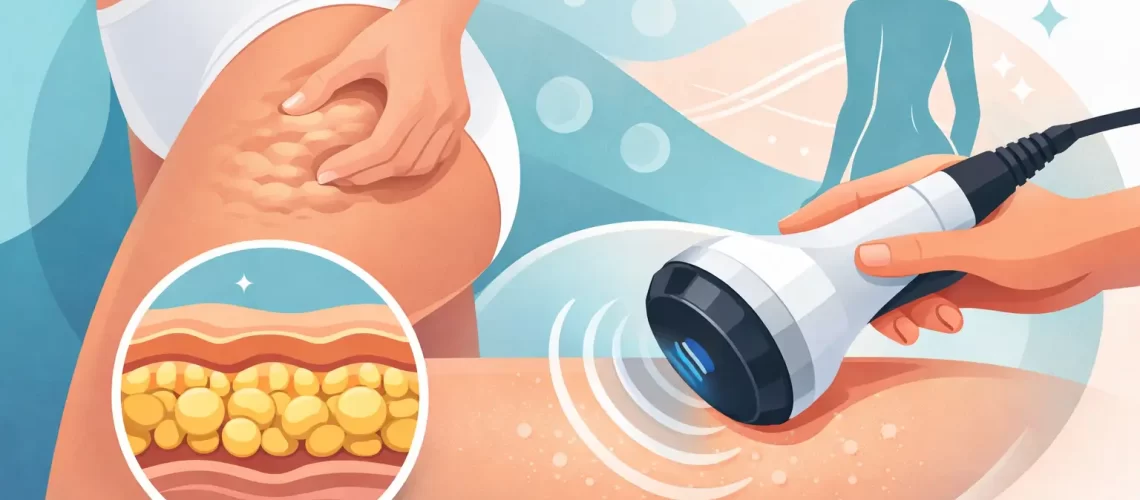
Cellulite can feel especially frustrating because it does not always reflect your habits. You can drink water, exercise regularly, take care of your body, and still notice dimpling on the thighs, hips, or buttocks. That is one reason body cavitation for cellulite has become such a popular treatment – it offers a non-surgical option for women who want smoother-looking skin and more confidence in areas that tend to resist change.
For many women, the real question is not whether cellulite is normal – it is. The question is whether there is a realistic, supportive treatment that can improve its appearance without downtime, needles, or harsh recovery. Body cavitation can be part of that answer, as long as expectations are grounded in how cellulite actually works.
What body cavitation for cellulite is meant to do
Body cavitation is a body-contouring treatment that uses ultrasound technology to target localized fat beneath the skin. When used in areas affected by cellulite, the goal is not to erase every dimple forever. The goal is to improve the look and feel of the skin by addressing some of the fullness beneath the surface that can make texture appear more uneven.
Cellulite develops when fat pushes up against connective tissue under the skin, creating that puckered or rippled look. Hormones, genetics, skin thickness, circulation, and collagen loss all play a role. That is why cellulite can show up on women of many sizes and fitness levels. It is also why no honest provider should promise perfection.
What body cavitation can do is help reduce the appearance of bulk in targeted areas, which may soften the visible texture of cellulite over time. In some clients, the skin looks smoother and the contour looks more refined. In others, the change is subtle but still worthwhile, especially when the treatment is part of a broader plan that supports skin tone and circulation.
How body cavitation works beneath the skin
The treatment uses low-frequency ultrasound waves to target fat cells in a specific area. Those waves are designed to disrupt the fat cell membrane, allowing the contents to be processed through the body’s natural metabolic pathways. The treatment is non-invasive, which means there are no incisions and typically no recovery period that interrupts daily life.
During a session, a handheld device is moved over the treatment area. Most clients describe the experience as comfortable. You may feel warmth or hear a high-pitched sound during treatment, but it is generally considered easy to tolerate.
For cellulite, the benefit comes from improving the look of areas where volume and uneven texture are working together. If there is a mild to moderate fatty layer beneath the skin, body cavitation may help create a smoother appearance. If the cellulite is more fibrous, more advanced, or combined with significant skin laxity, results may be less dramatic on its own.
That distinction matters. Cellulite is not just a fat issue. It is also a skin structure issue. So while cavitation can help, it often works best when viewed as one part of a realistic body-care strategy rather than a magic fix.
Who tends to see the best results
The best candidates for body cavitation for cellulite are usually women with mild to moderate cellulite and localized areas of fullness, not those seeking major weight loss. This treatment is meant for contouring and smoothing, not for treating obesity or replacing healthy habits.
Women often see the most noticeable changes on the thighs, outer thighs, buttocks, lower abdomen, or flanks. If your skin still has decent elasticity and your cellulite is more visible when standing than when lying down, you may respond especially well. Good hydration, regular movement, and a stable lifestyle also support better outcomes.
If the skin is very loose, or if the cellulite is deeply tethered and accompanied by more advanced firmness loss, your provider may recommend combining cavitation with other supportive treatments or adjusting expectations. A thoughtful consultation matters because the right treatment plan should fit your body, not a trend.
What results to expect from body cavitation for cellulite
Most clients need a series of sessions rather than one appointment. Cellulite develops over time, and improving its appearance usually takes consistency. You may notice early changes such as skin looking a bit smoother or the treated area feeling less heavy, but more visible contour refinement often develops gradually over several treatments.
Results vary based on the treatment area, your body composition, hydration, circulation, and how your lymphatic system responds. Some women are thrilled with the improvement in texture and silhouette. Others see a more modest softening of dimpling. Both experiences can be normal.
This is where honest guidance matters most. Body cavitation can improve cellulite, but it does not stop the natural factors that contribute to it, such as aging, hormonal shifts, or connective tissue changes. Maintenance sessions may be helpful if you want to preserve your results.
It also helps to remember that smoother does not have to mean flawless. Many clients simply want to feel more comfortable in fitted clothing, more confident in a swimsuit, or less distracted by the texture they see in certain lighting. That is a meaningful result.
What helps the treatment work better
Hydration is one of the most important parts of supporting body cavitation. Drinking enough water before and after treatment helps your body process what the treatment targets. Gentle movement, such as walking, can also support circulation and lymphatic activity after your session.
Consistency matters too. Spacing sessions appropriately and following your provider’s recommendations gives your body the best chance to respond well. If you are receiving treatment in an area where cellulite has been present for years, it is reasonable to expect that improvement will take time.
Lifestyle habits still matter, but not in a punishing way. Nourishing food, movement, sleep, and stress management all support skin health and circulation. None of these guarantee the absence of cellulite, because cellulite is not a sign of failure. They simply create a better environment for treatment results and long-term maintenance.
Body cavitation versus other cellulite approaches
Many women compare cavitation to massage-based treatments, radio frequency, skin tightening services, or topical products. Each option has its place, and the best choice depends on what is causing the texture concern.
If the main issue is localized fullness with visible dimpling, cavitation may be a strong fit. If the bigger concern is loose skin, another treatment focused more directly on tightening may be more helpful. If circulation and temporary puffiness are contributing to the look of the area, massage-based approaches may offer supportive benefits. Topical products can improve hydration and skin feel, but they usually have limited impact on deeper cellulite structure.
This is why a personalized approach matters so much. The most effective treatment plan starts with an experienced eye, not a one-size-fits-all promise. At Cleopatra’s Timeless Beauty, that kind of personalized care is part of what helps clients feel informed, reassured, and genuinely supported.
Common questions clients often have
One of the most common concerns is whether body cavitation hurts. For most people, it does not. The treatment is generally comfortable and easy to fit into a normal routine.
Another common question is how long results last. That depends on your body, your lifestyle, and whether you continue with maintenance. Because cellulite is influenced by several long-term factors, touch-up sessions may be useful.
Clients also ask whether cavitation can remove cellulite completely. A careful answer is no. It can improve the appearance of cellulite, sometimes significantly, but complete removal is not a realistic promise. Good esthetic care is about visible improvement, education, and helping you feel confident in your skin as it is being supported.
Why realistic, caring treatment matters
Women are often sold extreme messages about their bodies. Either you are told cellulite is something to hide at all costs, or you are told you should never want to change anything. Most real women live somewhere in the middle. You can accept that cellulite is common and still want smoother-looking skin. You can practice self-love and still invest in treatments that help you feel your best.
That is the healthiest way to think about body cavitation for cellulite. It is not about chasing perfection. It is about choosing a non-invasive treatment that may help your body look more refined, your skin appear smoother, and your confidence feel a little more effortless.
If you are curious about whether cavitation is right for your body, start with a professional evaluation and give yourself permission to want both care and results. Loving your body and wanting support for it can absolutely belong in the same conversation.